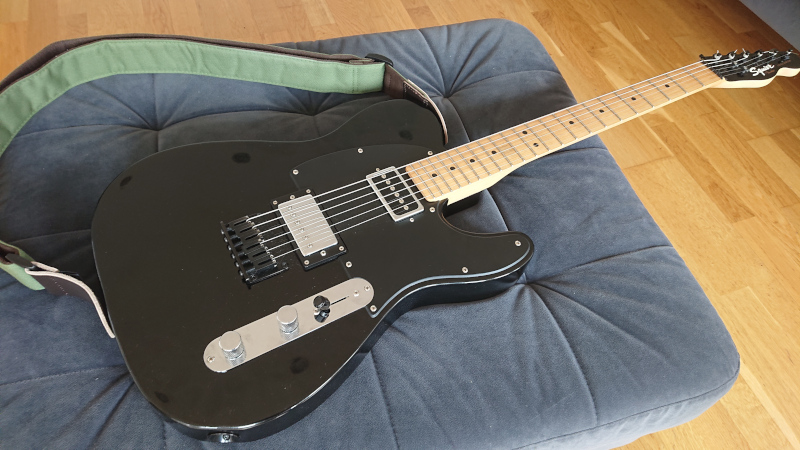
It's become tiresome to constantly retune my E string down to D and vice versa. More so, the repitching of the vocal stems, which I use when creating backing tracks, was lacking in quality, despite using modern algorithms. That was my excuse for buying a new guitar. I changed the neck humbucker on my modified Squier Telecaster to a "P90" I found online. I can't find the shop where I bought it again. The P90 is under quotation marks, because I've seen a similar product posted online where someone removed the cover and it turns out it's just a regular single-coil pickup underneath. Either way, everything is better than a humbucker on the neck. I turned the guitar into a Chugcaster tuned down to Drop C.
My new guitar was supposed to have an HSS configuration, to have a vibrato system and I'd tune it to E standard. It would also be neat if it had a built-in coil-split for the humbucker, stainless steel frets, a TUSQ XL nut and preferably a neck radius of 12 inches or more. Ideally, it should also be in a natural colour. The potential models were: Larry Carlton S7FM by Sire, Nick Johnston HSS by Schecter, Fender Stratocaster Player II Modified, some Ibanez AZ models and the Yamaha Pacifica Standard Plus. The Fender Player II Modified has a 9,5 inch radius, so I didn't want that one. The Ibanez models were 1000€ more expensive and had ugly colours.
Sire Larry Carlton S7FM New Gen
The first guitar I bought was the Larry Carlton S7FM New Gen by Sire. It had everything I mentioned above but the neck radius. It had a compound radius from 9,5 inches onwards. It even had rolled fretboard edges. After getting it, I was incredibly disappointed. More than half of the frets were uneven. One wasn't even seated properly in the fretboard, I could fit a 0,0015 inch feeler gauge underneath it. It wasn't possible to adjust the stringt action below 2mm on the low E without any buzz. In fact, it buzzed with even higher actions than that. I've found some reviews from people with similar quality control issues on their Sire guitars. The plastic on the pickup selector switch was also cut badly with a sharp edge and the potentiometers were wobbly and with a deadzone. I've returned it to buy another guitar.
Schecter Nick Johnston HSS
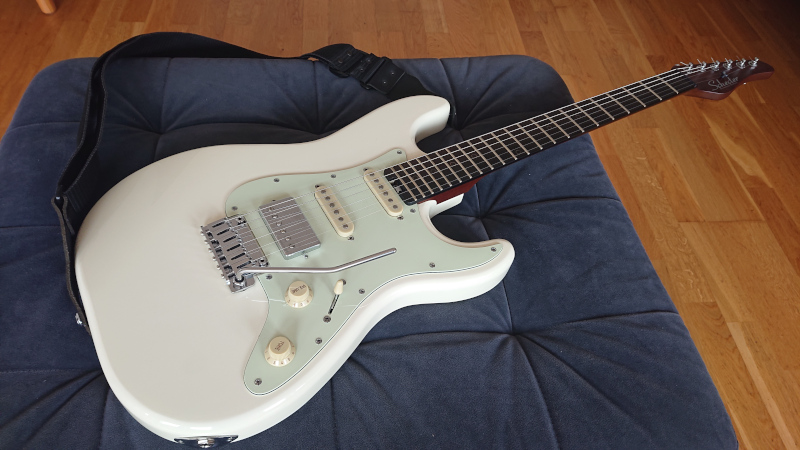
The next guitar was a Nick Johnston HSS. I've had bigger expectations, since it's even more expensive than the Sire guitar. It didn't prevent the disappointment.
Testing the frets with a fret-rocker was nerve wrecking after the past experience with the Sire. I felt a relief when most of them were pretty straight. I've continued testing and noticed something weird when using the vibrato. There was a zone where I could leave the vibrato and it would stay put. For example: I'd tune the string to an E. Pull on the vibrato arm and the string would remain tuned to F#. It wasn't returning back into position, it wasn't going back to the initial pitch (E in this case). Below is a video showcasing the issue.
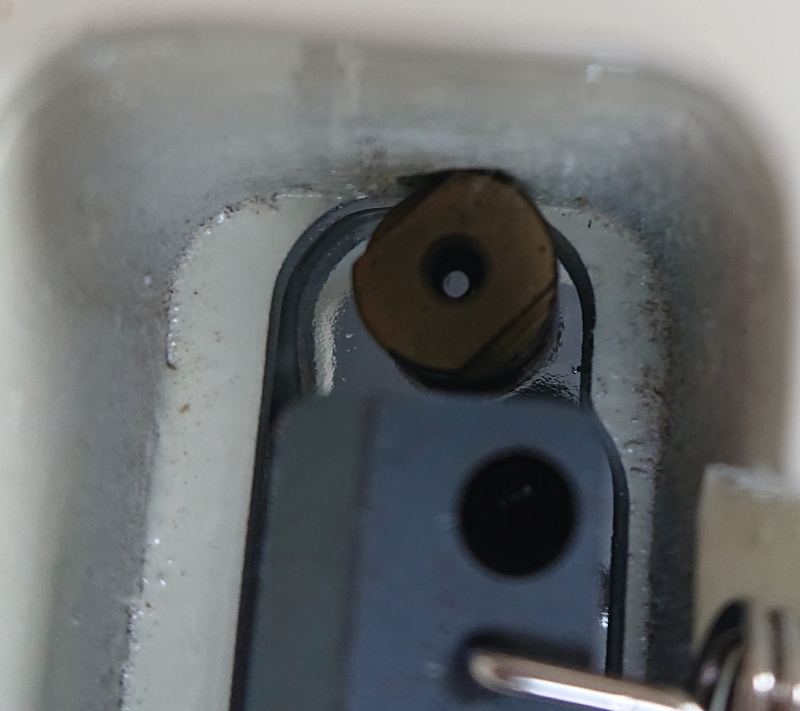
I've reported the strange behaviour to the retailer where I bought the guitar, Thomann. They told me that everything was okay with the vibrato system, but offered to return the money. Since the only other viable guitar was the Yamaha Pacifica Standard Plus, which also had comments about its shitty quality control online, I decided to take the guitar back. After all they said that it worked properly. After receiving the guitar, the same issue was still present. I doubt the guitar techs even tested the guitar properly or they just didn't bother and assumed I'd take a refund. I have a feeling this is a huge issue with these big retailers. It's not worth it for them to look at the problems with these "cheap" guitars, but rather just replace them. I've ordered a replacement vibrato bridge since I was convinced that it was broken. Then I took another look at it and noticed an incredible oversight by Schecter and its QC: part of the bridge was scraping against the cavity's wall. It was not just scraping, it carved itself into the wood. I've stumbled upon a post on the internet where someone mentions having exactly the same issue as me. I can't believe that something like this gets through QC. Not once, but apparently at least twice. See the picture below.
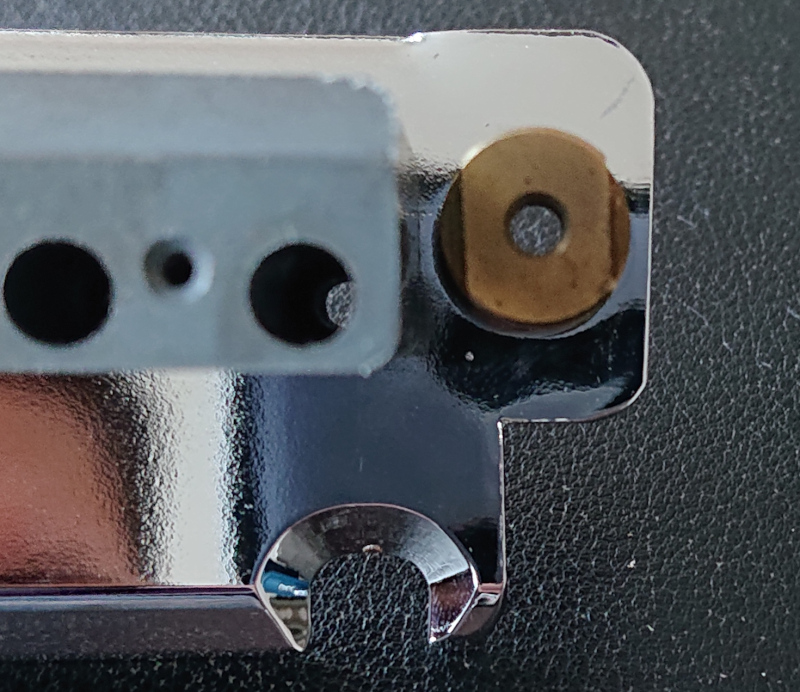
I tried to rotate the sleeve for the vibrato arm which was scraping against the wall. It was now perpendicular to the wall's cavity. See the picture below. It didn't help, it was still hitting the wall.
I've decied to sand down the wood a bit and also to replace the vibrato bridge. I was impatient and I've ordered it after all. I used normal sandpaper which was a mistake. It was arduous and took forever. The new replacement bridge by Gotoh, 510T-FE1, also didn't fit properly (even though I measured it before ordering), so I had to ruin the cosmetics by sanding down the edge of the cavity. With slightly more space in the cavity, it was able to move freely now. The Gotoh vibrato's nut was also pointed with its pointy edge towards the cavity. I tried to move it a bit, but the material its made out of is so brittle and soft, that it started peeling off. Another thing is the depth of the vibrato block. I bought the 42mm version, which was a mistake. The original Schecter vibrato is 37mm deep and Gotoh even offers a 37mm of the system. I couldn't find it anywhere in Germany though. Thomann stocks the 37mm version of the 510TS-FE1, but that one is lacking the FST mechanism. No idea if the FST mechanism is just marketing snake-oil, but after this whole fiasco, I was desperate for any possible improvement. The 42mm version fits, barely, incredibly snug. It's almost touching the cover, but I haven't noticed it imparting the function when the arm is being moved. One can always just remove the cover as a solution.
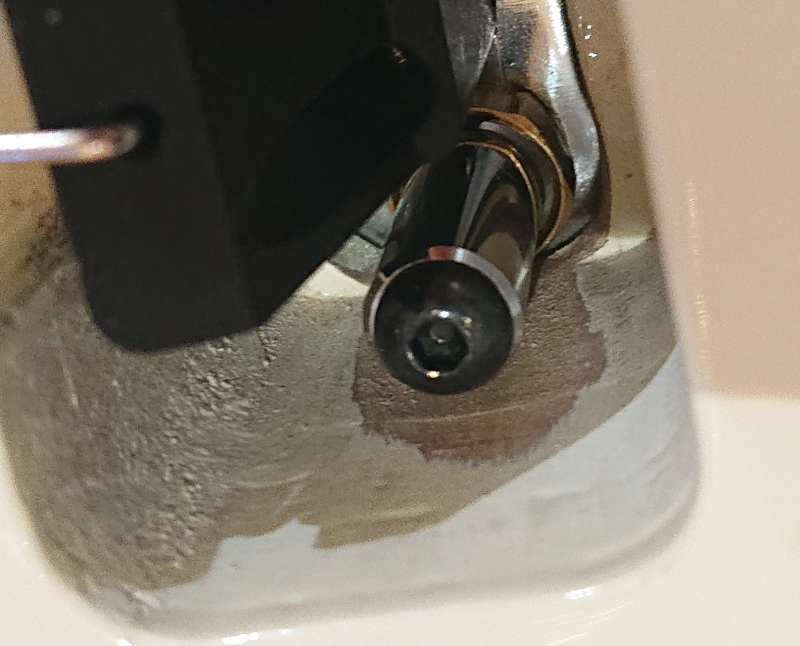
To my surprise, it seems to have fixed the issue. It's not touching the cavity's wall anymore and moving way more freely. I only replaced the bridge. I didn't use the other parts like the screws, the claw or the posts that came with the Gotoh system. I was afraid that the posts wouldn't fit snuggly into the wood after I removed the old ones. I will most likely replace it in the future though. I still have tuning issues after setting it up properly, but I think that's just the normal floating bridge stuff you can't avoid. In hindsight, I think that I hate floating bridges and I have a feeling that I'll never even use the vibrato.
The Gotoh system, apart from the mentioned nut problem above, also had an issue with its loose vibrato arm. Even though I did everything as instructed by the manual, it's still very loose. See the video below. I don't know if all of them are like this or if I got lucky again.
The string trees on the Schecter are also abysmally bad. Every time you'd use the vibrato, they would cause this screeching noise due to the friction of the strings dragging across them. I've replaced them with the Graphtecha string trees. The friction is way less now and there's no screeching.
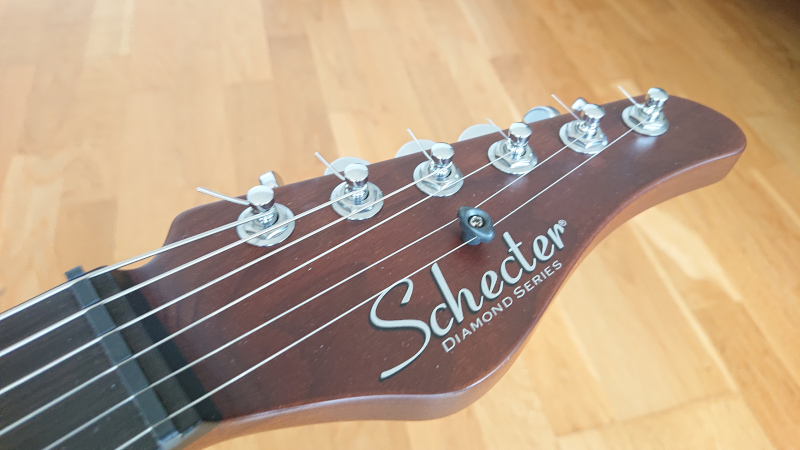
Another thing which annoyed me and I don't know if it's Schecter's or Thomann's fault, but the strings which came with it were rusty. Ironically, there was an Ernie Ball promo tag bundled with the guitar, saying how it's strung with excellent strings. I assume someone tested the guitar, the strings rusted and no one bothered at the retailer to check it. I hope it wasn't a floor model. The tag wasn't even attached to the neck, which makes me think it was used before. I also hated the potentiometers. The tone one has a deadzone and the knobs are horribly shaped. Using the push-pull system is awkward and if your fingers are at least somewhat sweaty, impossible. These are parts which cost a few dollars, so how come they're in this state in a 1000€ guitar?
Conclusion
I have a feeling that buying guitars is a gamble. Seems like I got extremely lucky with my 300€ Squier Telecaster (the Chugmaster from above). The neck was flawless, the frets all even, not pointy, the electronics worked flawlessly. Then on the other side I have these 1000€ guitars which are basically unplayable.
I'm considering buying only budgets guitars from now on and setting them up myself. The downside is that you have to buy extra equipment for that, but if the alternative is shelling out a thousand Euros and praying that you get a working model, then it's the sensible choice.